
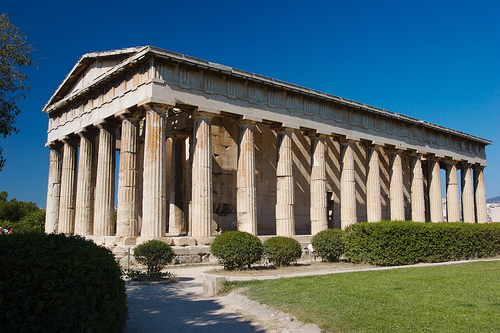
Temple of Hephaestus (wikisource)
What the use of hosia suggests to me, if we can take it to pertain to divine sanction of some kind, is that the spenders of the money clearly had to show that anything Athens spent money on was pious, and therefore sanctioned by the gods, even if it was tabbed for ostensibly non-religious purposes like war against Sparta.
Adding further complication, funds designated as hiera could be spent, in times of crisis, on non-religious matters. Clearly the distinction was less than absolute.
Either way, the presence of these ideas shows that people in Athens in charge of spending money had a significant obligation to establish the piety of their actions - an important fact to keep in mind when analyzing decisions made during the Peloponnesian War.

No comments:
Post a Comment